
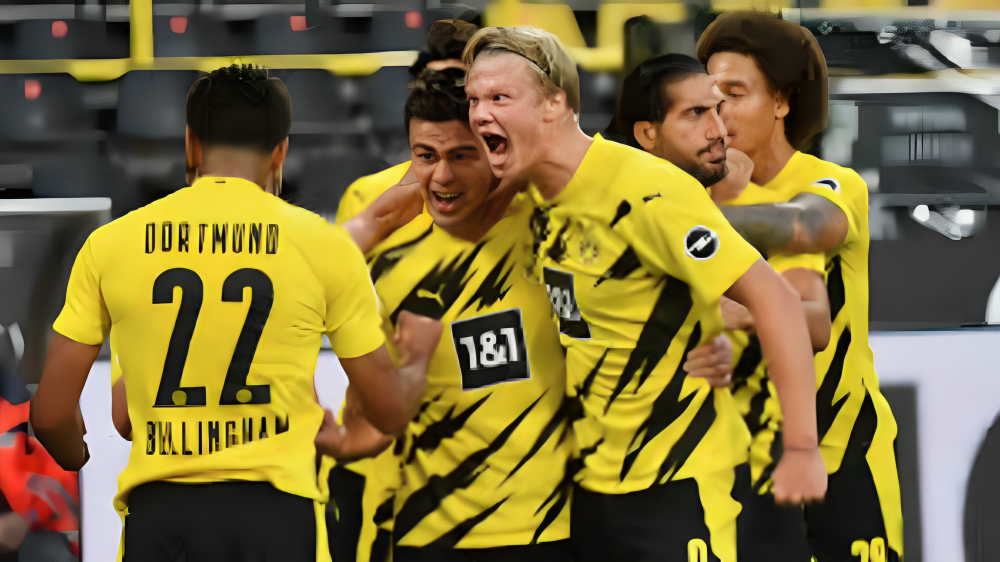
Imagine stepping into a cauldron of passion where green and white clashes with black and yellow, and every pass feels like a heartbeat. That’s the magic of Gladbach Dortmund, a fixture that’s as much about history as it is about heart. For decades, Borussia Mönchengladbach and Borussia Dortmund have turned their encounters into must-watch spectacles, blending fierce competition with moments of sheer brilliance. Whether you’re a die-hard fan chanting from the terraces or a newcomer dipping your toes into German football, Gladbach Dortmund represents the very best of the Bundesliga—raw energy, tactical wizardry, and that optimistic spark that says, “Hey, anything can happen on the pitch.” In this deep dive, we’ll explore the roots, the roars, and the reasons why this rivalry keeps pulling us back, time and again.
Born from the industrial heartlands of North Rhine-Westphalia, these two Borussias aren’t just teams; they’re symbols of resilience and joy. Gladbach, with their foal-like spirit of youthful vigor, and Dortmund, the black-and-yellow juggernaut fueled by the infamous Yellow Wall, have shared the spotlight since the Bundesliga’s early days. And oh boy, have they delivered thrills! From record-shattering thrashings to nail-biting draws, Gladbach Dortmund isn’t merely a match—it’s a story unfolding under the floodlights, reminding us why football’s got that unbeatable pull.
The Roots of Gladbach Dortmund: How Two Borussias Forged a Fiery Bond
Diving into the origins of Gladbach Dortmund feels like unearthing a treasure chest of football folklore. Both clubs trace their lineage back to the early 20th century, when working-class communities in Germany’s Ruhr region craved an escape from the daily grind. Borussia Mönchengladbach, founded in 1900, started as a ragtag group of lads playing on dusty fields, their name a nod to the Latin for “Prussia,” evoking a sense of sturdy pride. Fast-forward to 1909, and Borussia Dortmund emerges from a similar melting pot, blending local fervor with a dash of rebellion.
What truly ignited the Gladbach Dortmund spark, though? It was the Bundesliga’s birth in 1963, thrusting these neighbors into the big leagues. Suddenly, matches between them weren’t just local tussles—they were battles for supremacy in a fledgling national league. Picture this: the 1960s, when Gladbach’s Bökelbergstadion echoed with the roars of fans who saw their team as underdogs with bite. Dortmund, meanwhile, was building its Westfalenstadion fortress, drawing crowds that could shake the earth. Early clashes were tentative, like two old friends testing the waters, but by the 1970s, the rivalry had teeth. Gladbach’s golden era under Hennes Weisweiler clashed head-on with Dortmund’s gritty resurgence, turning every Gladbach Dortmund showdown into a festival of flair and fight.
And let’s not forget the shared “Borussia” moniker—it’s like twins squabbling over the family heirloom. Fans joke that it’s the only time two Borussias meet without hugging it out. Yet, beneath the banter, there’s mutual respect. Transitional phrases like “from humble beginnings to heated encounters” capture it perfectly; Gladbach Dortmund has evolved from regional rivalry to a Bundesliga cornerstone, optimistic proof that football unites as much as it divides. Heck, even in quieter years, the anticipation builds like a summer storm, promising drama every time the whistle blows.
Borussia Mönchengladbach: The Foals Who Gallop with Grace
Ah, Borussia Mönchengladbach—where do we even start? Nicknamed the Foals for their youthful, attacking style, this club’s journey is a testament to reinvention and unyielding optimism. Nestled in the Lower Rhine region, Gladbach isn’t the flashiest city, but its football heartbeat pounds loud. From their founding as a breakaway group from MTV Gladbach, the club has embodied that underdog charm, rising to prominence in the 1960s and ’70s like a phoenix from the ashes.
What makes Gladbach tick? It’s the philosophy: play with joy, press with purpose. Under legends like Hennes Weisweiler, they pioneered total football in Germany, influencing even the great Ajax. Five Bundesliga titles—1970, 1971, 1975, 1976, and 1977—cemented their status as Bayern’s early nemeses. And those European runs? Two UEFA Cups in 1975 and 1979, plus a heartbreaking European Cup final loss to Liverpool in 1977. Fans still sing about it, their voices a chorus of “what ifs” wrapped in pride.
Today, under modern stewardship, Gladbach remains a breeding ground for talent. Think Marc-André ter Stegen, who cut his teeth here before Barcelona came calling, or Marco Reus, the hometown hero who dazzled before heading to Dortmund—talk about poetic transfers! Their current Borussia-Park, opened in 2004, seats over 54,000 and buzzes with that same foal energy. Sure, they’ve had dips—relegations in the ’90s tested the faithful—but each comeback screams optimism. Bullet points of their ethos:
- Youthful Flair: Always scouting the next big thing, turning prospects into stars.
- Fan-First Vibes: Over 100,000 members strong, proving community trumps cash.
- Tactical Smarts: High-pressing game that’s as entertaining as it is effective.
In the Gladbach Dortmund saga, the Foals bring the artistry, reminding us that football’s sweetest when it’s bold and beautiful.
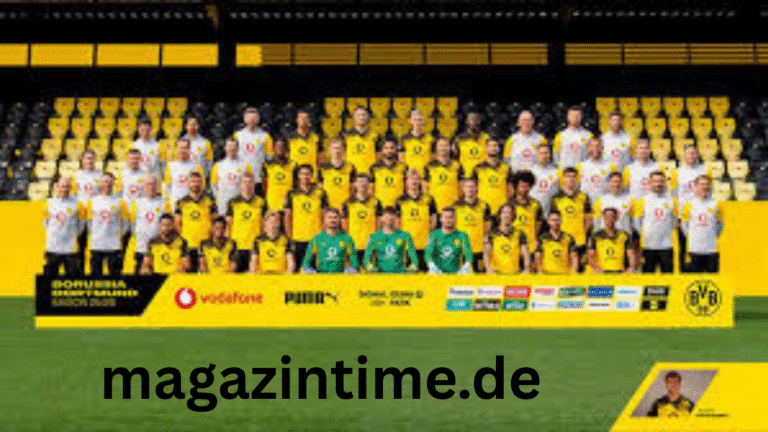
Borussia Dortmund: The Black and Yellow Storm of Signal Iduna Park
Switching sides to Borussia Dortmund—whew, what a ride! If Gladbach is the graceful galloper, Dortmund’s the thunderous storm, sweeping opponents with sheer force and fan frenzy. Founded amid the coal mines and steelworks, BVB (short for Ballspiel-Verein Borussia) captured the working-class soul from day one. Their 1990s resurgence under Ottmar Hitzfeld—Bundesliga wins in 1995 and 1996, plus that iconic 1997 Champions League triumph over Juventus—put them on the world map.
But Dortmund’s real superpower? The fans. Signal Iduna Park, Germany’s largest stadium at 81,365 capacity, isn’t just concrete and seats; it’s a living, breathing beast. That Yellow Wall—the Südtribüne standing terrace holding 25,000—creates an atmosphere so electric, it could power a city. Built in 1974 as Westfalenstadion, it’s hosted World Cups, Euros, and countless Gladbach Dortmund epics, where the noise alone feels like an extra player.
Legends abound here too. Michael Zorc, the midfield maestro; Roman Weidenfeller, the wall in goal; and modern icons like Jadon Sancho and Erling Haaland, who lit up the pitch before bigger stages beckoned. Under Jürgen Klopp in the 2010s, Dortmund became synonymous with gegenpressing—high-octane, heart-in-mouth football that won hearts globally. Even in tougher times, like near-bankruptcy in 2005, they bounced back, optimism their North Star.
Colloquialisms fit perfectly: Dortmund doesn’t just play; they “bring the house down.” In Gladbach Dortmund clashes, BVB’s intensity turns matches into blockbusters, where every tackle echoes like thunder.
The Legendary Venues: Borussia-Park and Signal Iduna Park
Nothing amps up the Gladbach Dortmund drama like the stadiums themselves—two fortresses of fandom that ooze history and hype. Let’s start with Borussia-Park, Gladbach’s gleaming home since 2004. Replacing the intimate Bökelberg, this 54,067-seater modern marvel blends green expanses with state-of-the-art tech, yet keeps that cozy Rhine vibe. Floodlit nights here feel intimate, like the crowd’s whispering secrets mid-chant. It’s hosted UEFA finals and national team games, but for locals, it’s where foal magic happens—think Alassane Pléa’s curling strikes under the lights.
Then there’s Signal Iduna Park, Dortmund’s colossal crown jewel. Opened for the ’74 World Cup, this behemoth has evolved from Westfalenstadion to its sponsored moniker, but fans still call it “The Wall.” That Yellow Wall isn’t hype; it’s a tidal wave of yellow scarves and songs like “You’ll Never Walk Alone,” borrowed from Liverpool but owned by BVB. Capacity crowds make it a cauldron—opponents wilt, while home sides soar. Fun fact: it’s so loud, seismic sensors pick up the stomps!
In Gladbach Dortmund ties, venue matters. At Borussia-Park, Gladbach’s home edge shines; at Signal Iduna, Dortmund’s roar drowns out doubt. Both spots scream optimism: football’s not about bricks, but the bonds they forge.
Iconic Stars: Legends Who Defined Gladbach Dortmund Glory
Football’s flavor comes from its heroes, and Gladbach Dortmund has birthed a pantheon. For Gladbach, Berti Vogts—the terrier-like defender who anchored their ’70s dynasty, winning the 1974 World Cup with West Germany—embodies grit. Günter Netzer, the mop-topped playmaker, orchestrated symphonies from midfield, his vision as sharp as a stiletto. Jupp Heynckes, scorer of 195 goals, later coached Bayern to glory, but his Gladbach roots run deep. Modern echoes? Marco Reus, Gladbach’s prodigal son, whose silky skills lit up Borussia-Park before Dortmund called.
Dortmund counters with Michael Ballack, the towering midfielder whose prime here foreshadowed Chelsea stardom, or Stefan Reuter, the versatile rock. But Reus bridges both—starting at Gladbach, thriving at Dortmund with 429 appearances and counting. Erling Haaland’s 2020 blitz (16 goals in 15 games) turned Gladbach Dortmund into a goal-fest, while Jude Bellingham’s teenage poise hinted at future Ballon d’Or whispers.
These icons aren’t stats on a page; they’re stories. Vogts tackling like his life depended on it, Reus threading needles—dangling modifiers like “flying down the wing, unstoppable,” capture their essence. In Gladbach Dortmund lore, they remind us: stars shine brightest in rivalry’s glare.
Gladbach Dortmund Head-to-Head: Stats That Tell Thrilling Tales
Numbers don’t lie, but in Gladbach Dortmund, they dance! Across 49 meetings, Dortmund edges with 30 wins to Gladbach’s 14, plus 5 draws—goals tally 100-59 in BVB’s favor. Asian handicap? Dortmund’s at 66.7% win rate, over 2.5 goals in 66.7%. Recent form? Last six: Dortmund 4 wins, 1 draw, 1 Gladbach upset.
| Match Date | Competition | Result | Key Moment |
|---|---|---|---|
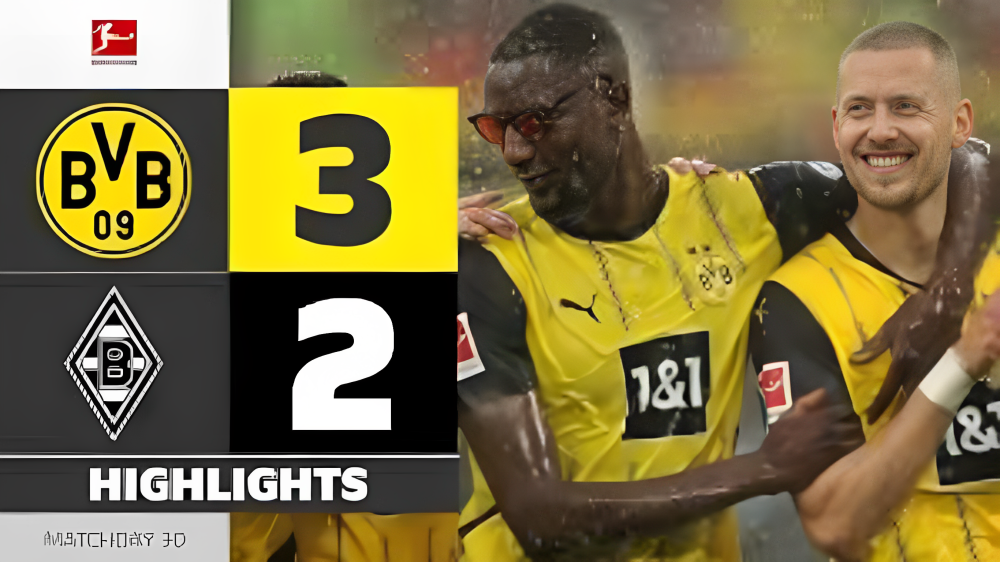
| Apr 20, 2025 | Bundesliga | Dortmund 3-2 Gladbach | Three goals in nine first-half minutes seal BVB comeback. |
| Dec 7, 2024 | Bundesliga | Gladbach 1-1 Dortmund | Tense draw, both sides eyeing Europe. |
| Apr 29, 1978 | Bundesliga | Gladbach 12-0 Dortmund | Record Bundesliga win; Gladbach’s miracle day. |
| May 21, 1983 | Bundesliga | Dortmund 4-4 Gladbach | Highest-scoring draw, Rummenigge’s late equalizer. |
| 1977/78 Season | Bundesliga | Gladbach 12-0 Dortmund | Foals’ thrashing cements rivalry infamy. |
These stats? They’re fireworks—high-scoring, unpredictable. Optimism abounds: with Dortmund’s home dominance (32 straight nets against Gladbach) and Gladbach’s upset potential, every game’s a coin flip wrapped in excitement.
Recent Gladbach Dortmund Clashes: Echoes of Epic Battles
Zooming into the now, recent Gladbach Dortmund outings pulse with promise. The April 2025 thriller—Dortmund’s 3-2 home win after a blistering first-half burst—kept BVB’s top-four dreams alive, Maxi Beier netting twice amid chaos. Earlier, December 2024’s 1-1 stalemate at Borussia-Park saw Gladbach’s Ko Itakura score, only for Dortmund to claw back, highlighting mutual respect.
Rewind to 2020: Haaland’s hat-trick in a 4-0 Dortmund rout, or Gladbach’s 2023 upset via Tim Kleindienst’s header. Interjections like “What a strike!” punctuate highlights—transitional phrases such as “from deficit to delight” mirror the swings. Post-match, players hug it out, optimistic nods to shared Borussia blood. As 2025’s December 20 rematch looms at Signal Iduna Park, fans buzz: will Gladbach’s press prevail, or Dortmund’s wall withstand? Recent form says yes to goals—over 2.5 in four of five.
Tactical Chess in Gladbach Dortmund: Strategies That Spark Genius
Tactics turn Gladbach Dortmund from brawl to ballet. Gladbach’s high line, inherited from Weisweiler, suffocates space—think 4-2-3-1 with wings bombing forward, Pléa lurking like a fox. Dortmund counters with Klopp’s gegenpress ghost: 4-3-3 waves of yellow, midfield terriers like Emre Can snapping at heels. It’s cat-and-mouse, optimistic evolution—coaches adapt, fans adore.
Idioms fit: Gladbach “dances on the edge,” Dortmund “brings the hammer.” Data backs it: Gladbach’s 60% possession in home wins, Dortmund’s 1.6 goals conceded per recent away. Upsets? When Gladbach parks the bus cleverly, Dortmund’s stars falter. Yet, the beauty’s in the balance—each Gladbach Dortmund is a tactical treatise, proving smarts beat strength.
Fan Culture: The Heartbeat of Gladbach Dortmund Passion
Forget the pitch; Gladbach Dortmund lives in the stands. Gladbach’s ultras, with choreos like foals charging, blend Rhine warmth with fierce loyalty—over 93,000 members chant “Es gibt nur eine Borussia!” Dortmund’s Yellow Wall? A 25,000-strong symphony, scarves aloft, drowning rivals in decibels. Rivalry’s playful: songs mock the other Borussia, but post-whistle, beers flow.
Colloquialisms abound—”it’s not over till the fat lady sings,” yelled amid flares. Optimism shines: fan initiatives like joint anti-racism drives show unity. In Gladbach Dortmund, supporters aren’t spectators; they’re the soul, turning matches into communal catharsis.
The Future Beckons: Why Gladbach Dortmund Shines Brighter Than Ever
Peering ahead, Gladbach Dortmund gleams with potential. Youth pipelines—Gladbach’s Koné, Dortmund’s Beier—promise fireworks. With Champions League spots dangling, December’s clash could swing seasons. Tactical tweaks, global scouting: it’s optimistic evolution, where history fuels hunger.
Challenges? Injuries, like Gladbach’s Honorat sidelined, test depth. Yet, resilience defines them—Dortmund’s 2024 CL final run, Gladbach’s Europa pushes. In Gladbach Dortmund, the future’s not just bright; it’s blinding, a beacon for football’s enduring thrill.
Fazit
Wrapping it up, Gladbach Dortmund isn’t a rivalry—it’s a romance, woven from triumphs, tears, and that unbreakable optimistic thread. From ’70s glory to 2025’s edge-of-seat epics, it captivates, challenges, and charms. Whether Borussia-Park’s intimacy or Signal Iduna’s roar calls, this fixture whispers, “Come back soon.” For fans old and new, Gladbach Dortmund endures as football’s finest gift—passionate, profound, and positively pulsating. Here’s to the next chapter; may it roar even louder.
FAQs
1. When is the next Gladbach Dortmund match scheduled?
The upcoming Gladbach Dortmund clash is set for December 20, 2025, at Signal Iduna Park in the Bundesliga—mark your calendars for what promises to be a cracker!
2. Who holds the edge in Gladbach Dortmund head-to-head stats?
Dortmund leads with 30 wins to Gladbach’s 14 across 49 meetings, but those Gladbach upsets, like the legendary 12-0, keep it spicy and unpredictable.
3. What makes Signal Iduna Park special for Gladbach Dortmund games?
It’s the Yellow Wall’s thunderous support that turns Dortmund’s home into a fortress—over 81,000 fans create an atmosphere that’s simply unbeatable.
4. Which players have starred in recent Gladbach Dortmund encounters?
Maxi Beier’s double in April 2025’s 3-2 Dortmund win and Ko Itakura’s strike in the 1-1 draw highlight the talent bubbling on both sides.
5. Why is Gladbach Dortmund more than just a derby?
Beyond the goals, it’s the shared Borussia spirit—fans, history, and that optimistic vibe—that makes every Gladbach Dortmund feel like family feud with flair.